Collection episode 01 · 2:08 · English
Peptides in 2TM · Tesamorelin
Tesamorelin: a signal, a specific indication
Follow tesamorelin from a modified GHRH signal to a CT-based visceral-fat endpoint, keeping the studied population, approved use, and safety context in view.
English narration with optional English captions.
The complete English transcript
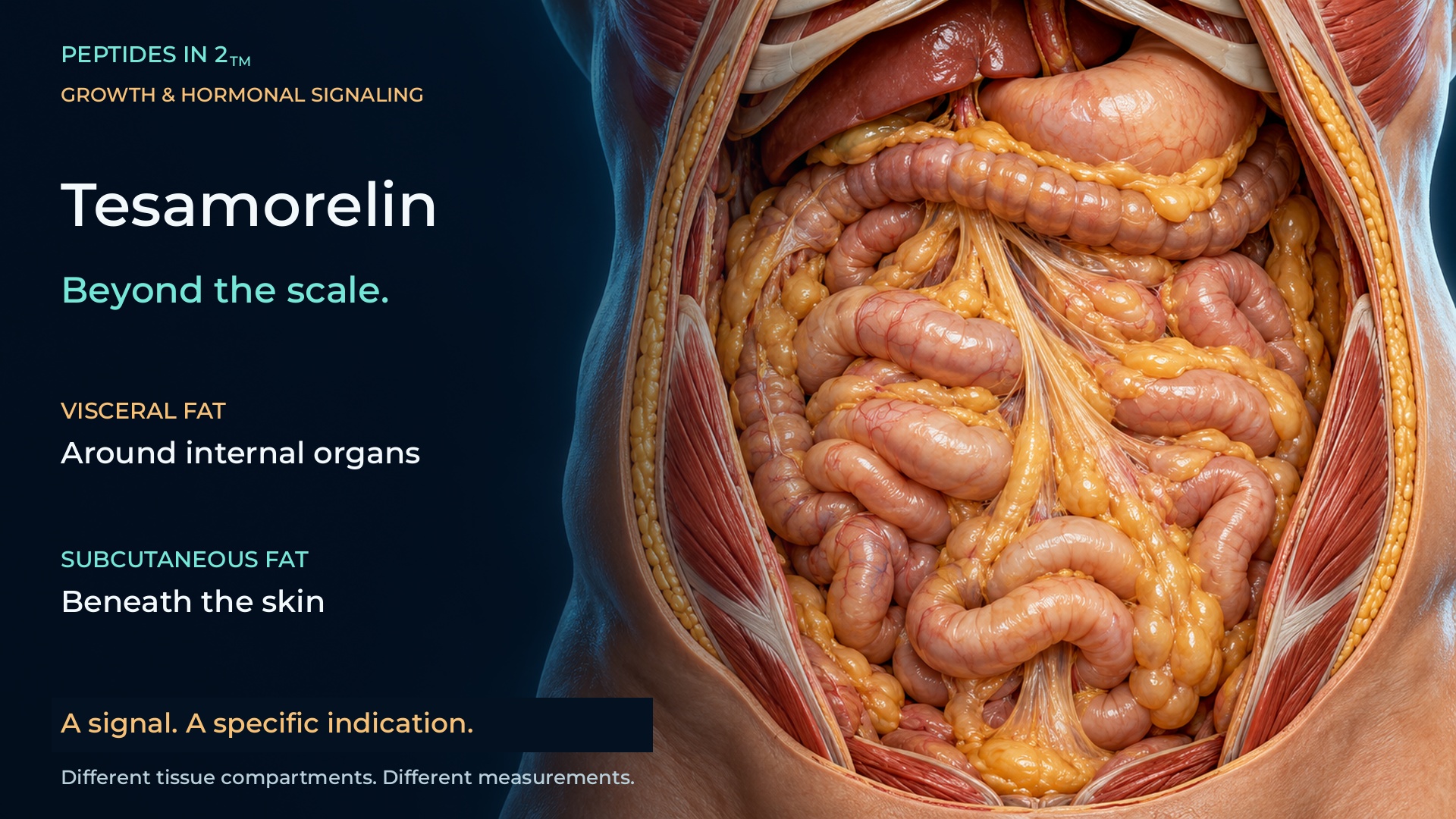
Tesamorelin begins our growth and hormonal signaling collection with fat that a bathroom scale cannot distinguish. Visceral fat surrounds internal organs. Subcutaneous fat lies beneath the skin. Measuring one is different from measuring total body weight.
Developed by Theratechnologies in Montreal, tesamorelin is a modified, forty-four-amino-acid version of growth-hormone-releasing hormone. The United States first approved Egrifta in twenty ten for excess abdominal fat in adults with HIV-associated lipodystrophy.
It acts at the pituitary, encouraging the body to release growth hormone and increasing IGF-1. It stimulates a signaling pathway rather than supplying growth hormone itself.
In a randomized trial led by Julian Falutz and colleagues, four hundred twelve adults with HIV and abdominal fat accumulation received tesamorelin or placebo for twenty-six weeks.
CT measurements showed average visceral fat falling fifteen point two percent with tesamorelin, while placebo increased five percent. These were changes in a defined tissue measurement, not percentages of total body weight.
The approved use is specific. Tesamorelin is not indicated for weight-loss management. Elevated IGF-1, fluid retention and glucose intolerance require attention. Active cancer and pregnancy are among its contraindications. Long-term cardiovascular safety has not been established.
Connect the medicine to its studied population and measured outcome. These findings do not establish an anti-aging or bodybuilding benefit.
World Peptide Foundation. Peptides in 2. Every experience matters.